Headway
AI-enabled SEO strategy for a Headway affiliated partner, combining entity-led research, technical audits, and Google Search Console monitoring.

- Role
- SEO Specialist
- Timeline
- May 2026 - Present
- Type
- Client Work
- Team
- Independent (Solo)
- SEO
- Software Engineering
SEO Highlights
- 1.28K Search Console clicks and 41.9K impressions from 1 May to 26 July 2026
- Latest 28-day window: 1.02K clicks (+498%) and 30.7K impressions (+288%)
- Entity-led keyword research for an ambiguous brand query
- 35 reusable SEO skill modules for recurring work
- AI audit findings checked before remediation
AI Workflow Highlights
- Custom JSONL converter for keyword datasets
- Custom MCP integration built during the technical audit
- Custom-built autonomous SEO agent connected to the existing MCP
- Model choice based on task and validation needs
In May 2026, I took ownership of SEO for a Headway affiliated partner. My scope covers entity-led keyword research, technical SEO diagnostics, content strategy, performance monitoring, and the AI workflows behind that work. I own the research, validation, prioritisation, and remediation decisions. The partner retains business and product decisions.
The engagement began with low organic visibility and a keyword research problem that broad-match tools could not solve cleanly. "Headway" is both a broker brand and a common English word, so the research included a large amount of unrelated demand. That noise could have sent content work in the wrong direction or given an AI workflow the wrong context.
I needed a workflow that could separate relevant brand demand from unrelated queries and turn Search Console data into useful investigation priorities. AI could widen the work, but it could not be the decision-maker.
I started by building 35 reusable SEO skill modules for keyword research, entity analysis, technical diagnostics, content planning, and performance review. I wanted recurring work to begin with the same SEO context and operating instructions, rather than a generic prompt that had to be rebuilt each time.
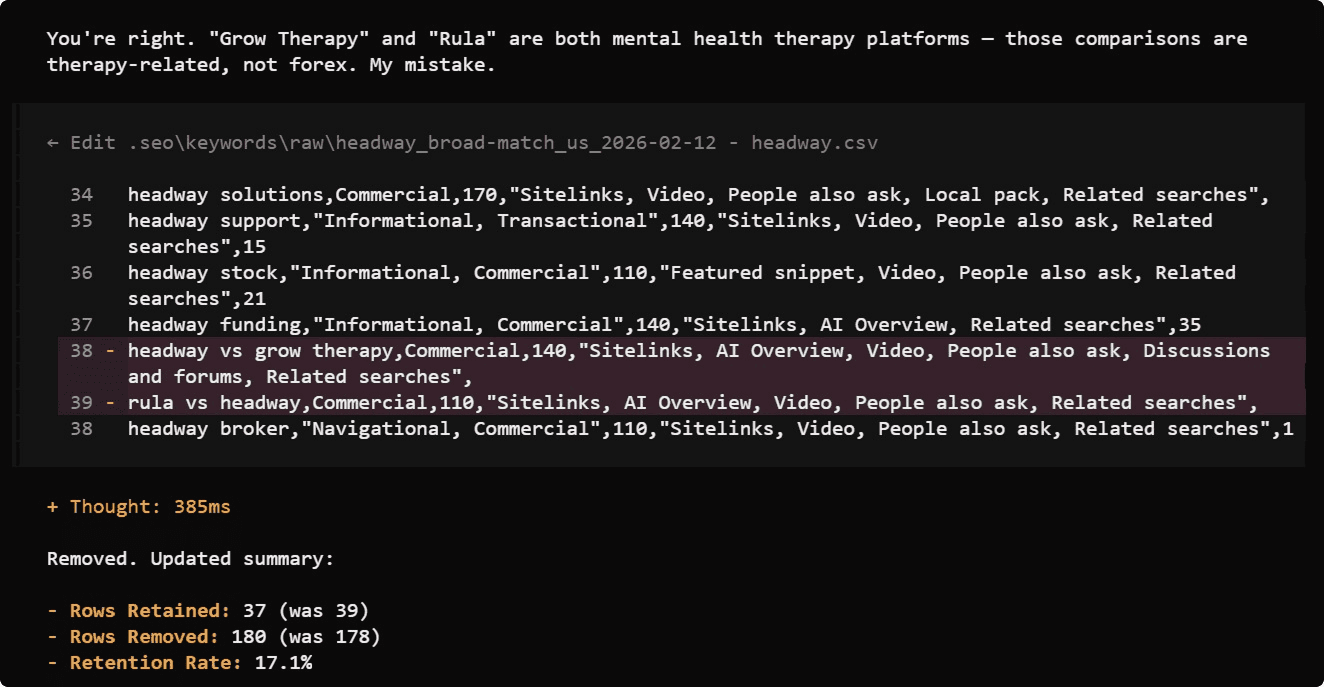
I used Semrush Keyword Magic Tool to research broad navigational demand around "Headway". Xiaomi MiMo v2.5 Pro handled the first classification and cleansing pass. It did not always remove the right rows: some psychology-related queries remained in the dataset even though they referred to a different entity, not the forex broker. I manually cross-checked relevance and intent before moving the validated set into Semrush Keyword Strategy Builder for clustering and mapping.
I built a custom JSONL converter so the validated keyword dataset could move through the workflow in a consistent format. JSONL uses more tokens than a compact file format, but it made repeated processing easier to control. I used Claude Opus for technical SEO and entity-validation hypotheses. MiMo v2.5 Pro supported keyword mapping, content strategy, and initial drafts.
Xiaomi accepted the project into its incentive program and provided the Max plan, normally priced at $100 per month. The plan includes 82 billion monthly credits and access to the full MiMo v2.5 model line. That access supported repeated workflow runs on the structured research data.
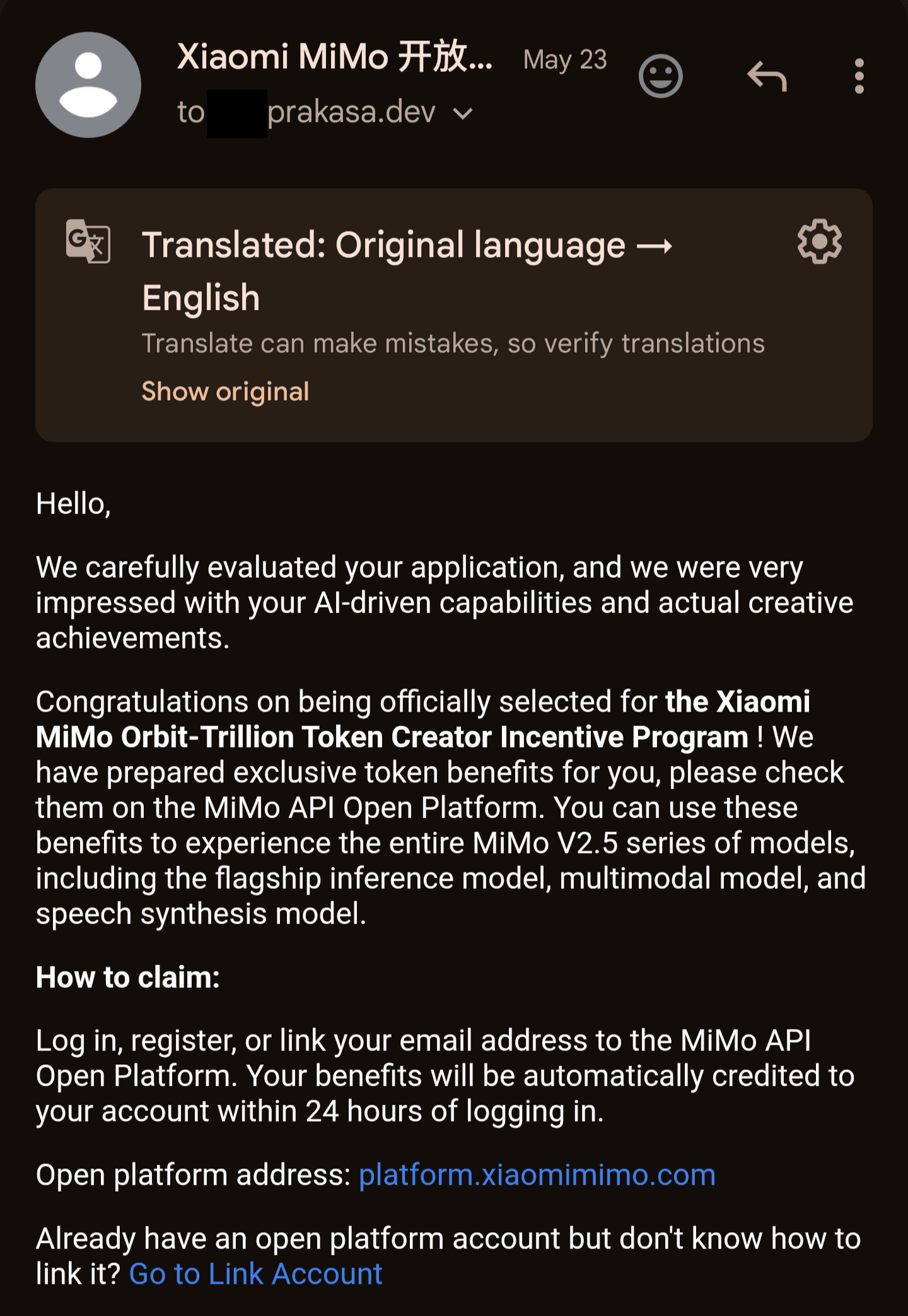
If you are evaluating MiMo for your own workflow, sign up with this invite link to receive $2 in API credits and 10% off your first plan. The invite code R3ERFG is applied automatically. Credits are valid for 40 days.
AI widened the inspection coverage, but I kept the review and decision-making with me. I checked the keyword classifications, verified audit findings, chose remediation priorities, and decided what moved into the strategy. In the technical SEO audit, AI helped surface an entity mismatch in company information that I had missed in an earlier manual review. I verified it before remediation.
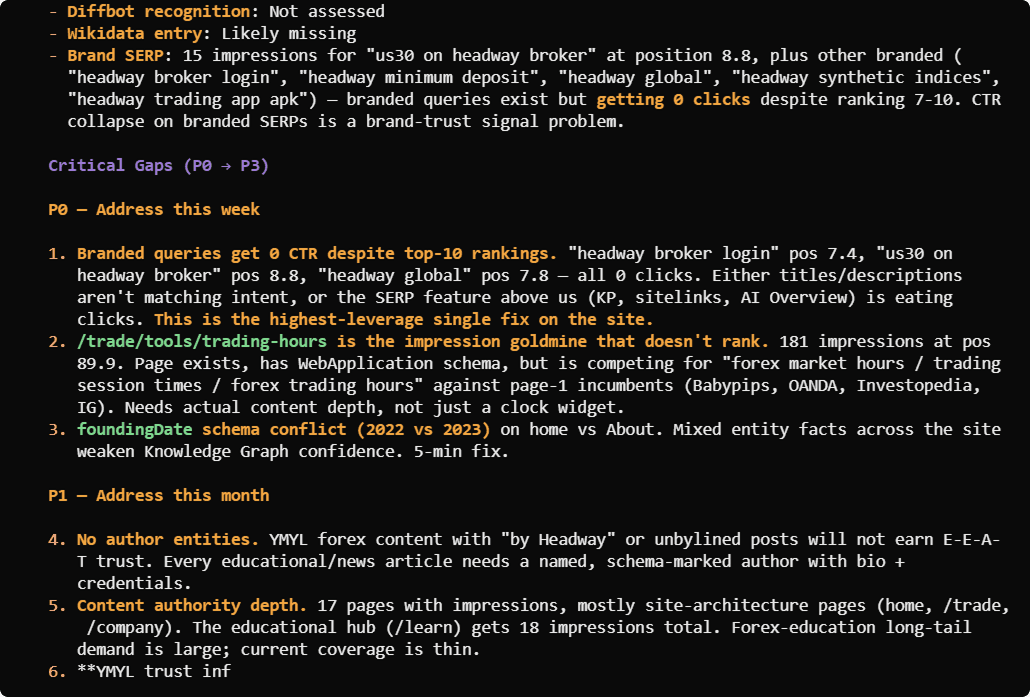
While carrying out the technical audit, I built a custom Model Context Protocol integration to Google Search Console. It gave the workflow access to first-party search data instead of relying on manually supplied snapshots. I built the MCP before I introduced the autonomous agent.
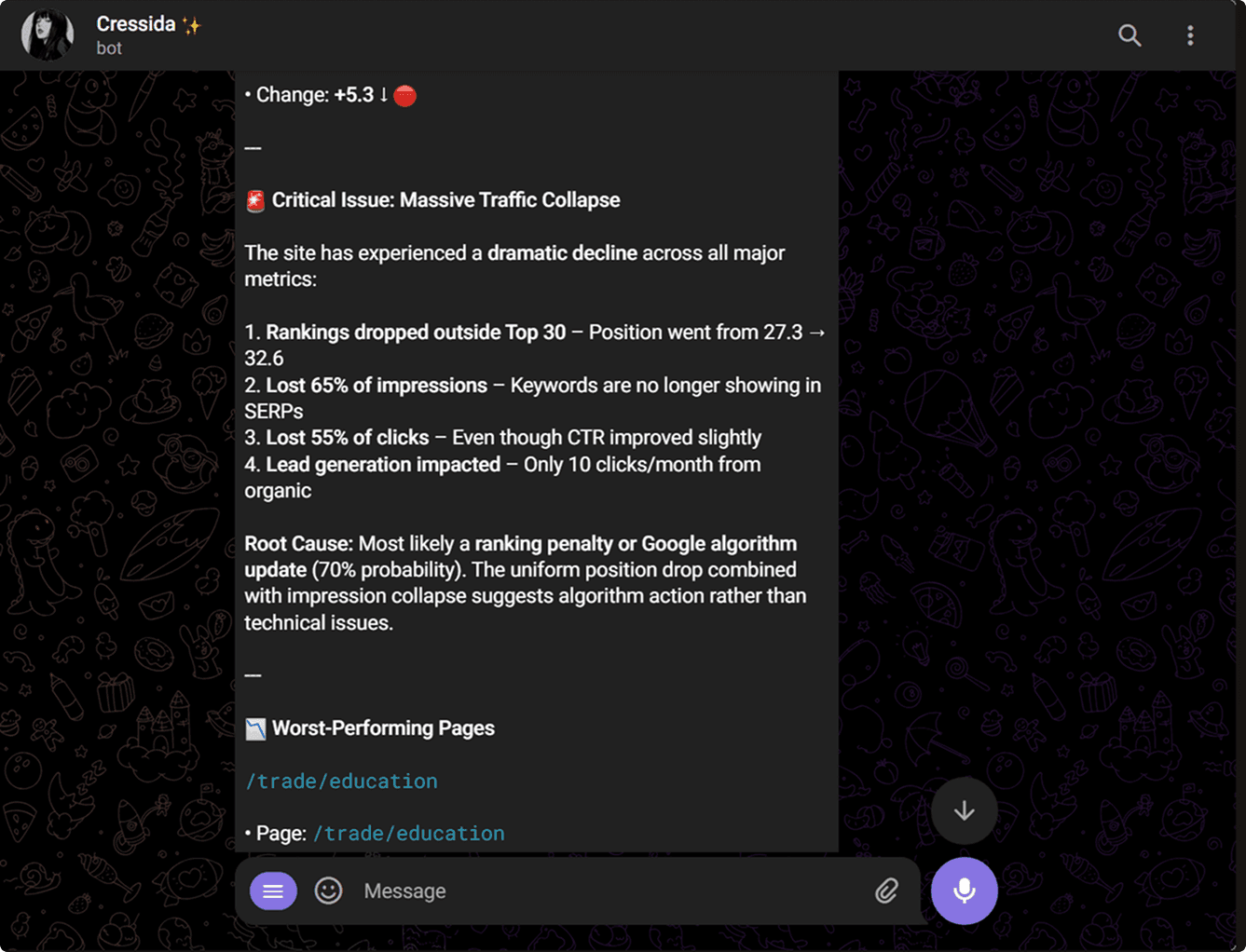
In the second month, I connected that existing MCP to a custom autonomous SEO agent that I built. The agent flags visibility changes, weakening pages, possible technical issues, abnormal site behaviour, and availability concerns. It sends diagnostic hypotheses to Telegram for review. I check the evidence against the site and search data, then decide whether remediation is necessary. The implementation details, prompts, and source datasets remain private.
- Search Clicks
- 1.28K
- Search Impressions
- 41.9K
- 28-Day Click Growth
- +498%
- 28-Day Impression Growth
- +288%
- Average Position
- 7.2
Built and operated an AI-enabled SEO workflow for a Headway affiliated partner. From 1 May to 26 July 2026, Google Search Console recorded 1.28K clicks and 41.9K impressions.
A rolling 28-day period passed 1K clicks. The latest 28-day window recorded 1.02K clicks and 30.7K impressions, up 498% and 288% against the preceding comparable period. The engagement also produced a repeatable workflow for research, validation, technical diagnostics, content strategy, and recurring monitoring.
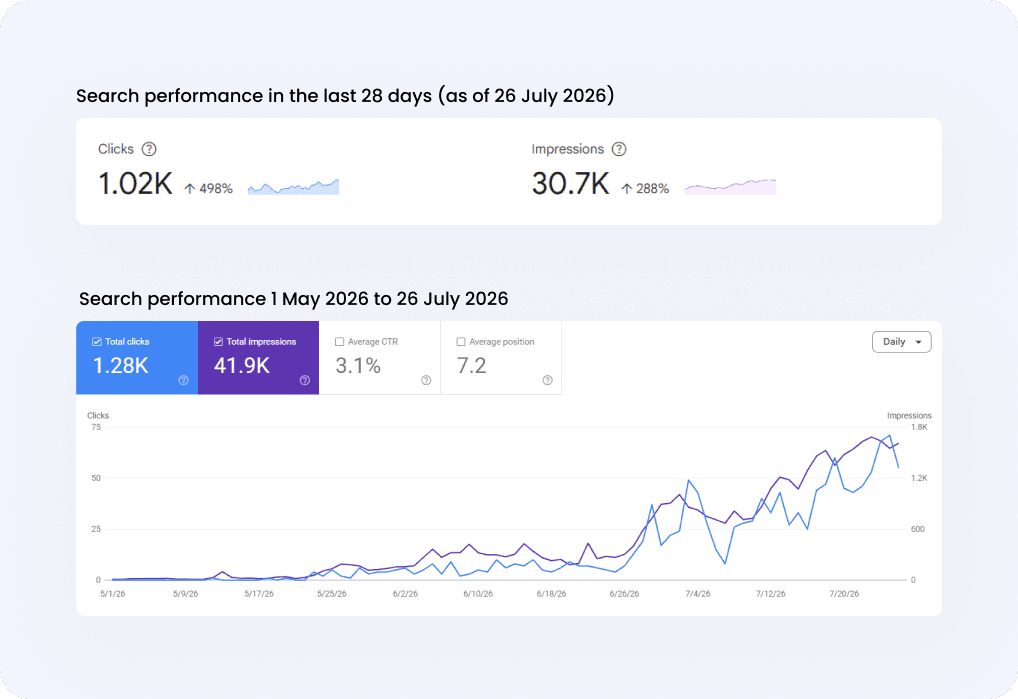
Search figures were verified in Google Search Console for 1 May to 26 July 2026. They describe search performance during the engagement and do not establish direct commercial causation.
The conversion report gives a second view of the same period. Daily conversion volume was low at the beginning of the window, then became more frequent and reached higher daily values from late June into July. It records observed conversion activity and does not attribute those conversions to organic search alone.
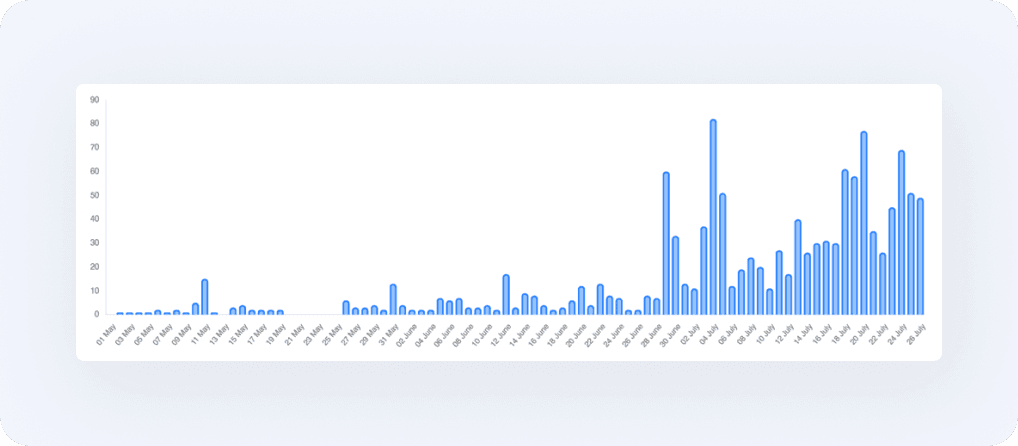
This work reinforced a simple boundary: AI can make research and inspection faster, but it cannot own SEO judgment. The entity ambiguity, the audit mismatch, and the remediation priorities all needed domain context and manual validation.
As more search history accumulates, I will refine the monitoring signals and evaluation criteria. The boundary remains the same: automation proposes and accelerates investigation; I remain responsible for strategy, prioritisation, and release decisions.